Knowledge that kept getting lost
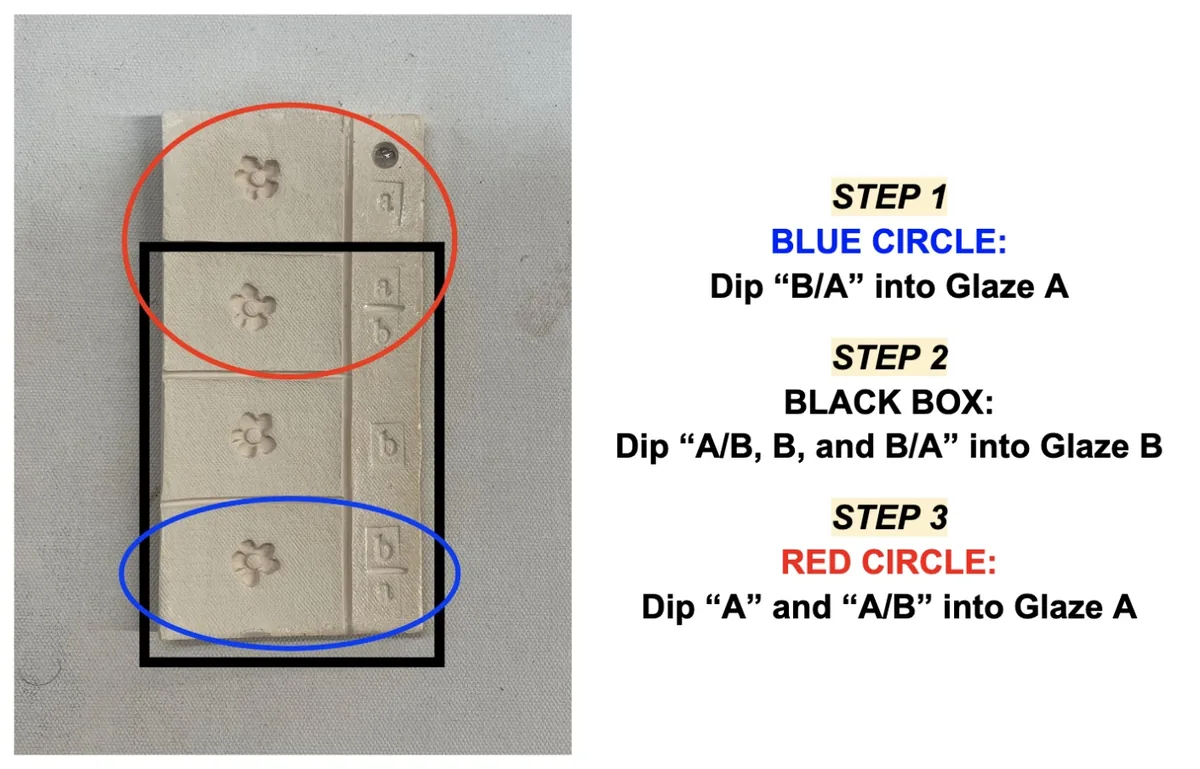
Glaze testing is slow. A single test tile takes days to make, dry, dip, and fire, and the result depends on the exact combination of glazes, the order they were applied, and the kind of firing.
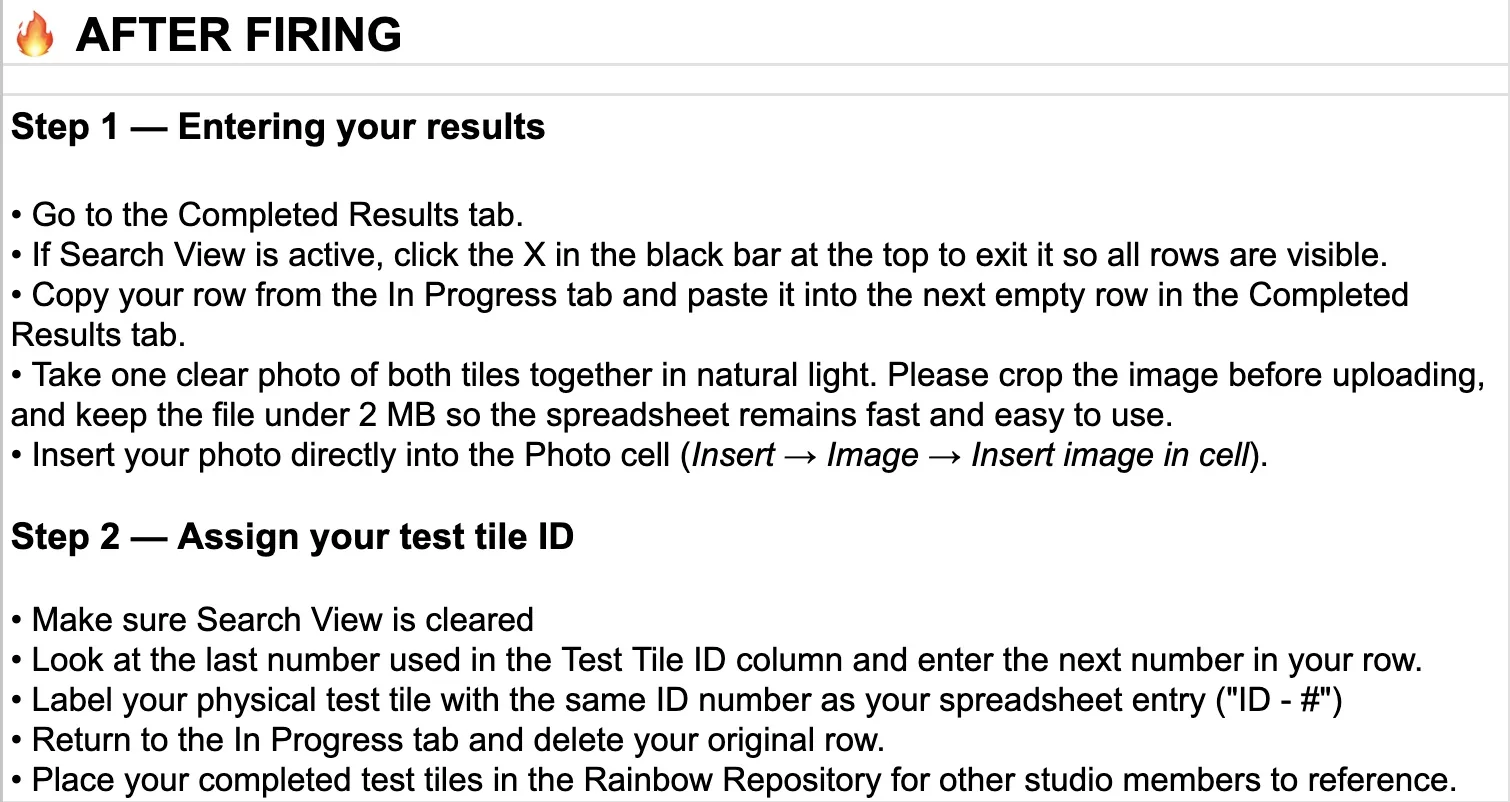
Members were doing this work and then losing it. Without a shared record, the same combinations were tested again and again, and useful results never reached anyone else.
The studio had no software to enforce anything. Any system had to work through the workflow and the documentation instead.
How might we make recording a glaze test easier than repeating one, so the studio builds a collective archive instead of individual notebooks?
A controlled vocabulary, not a form
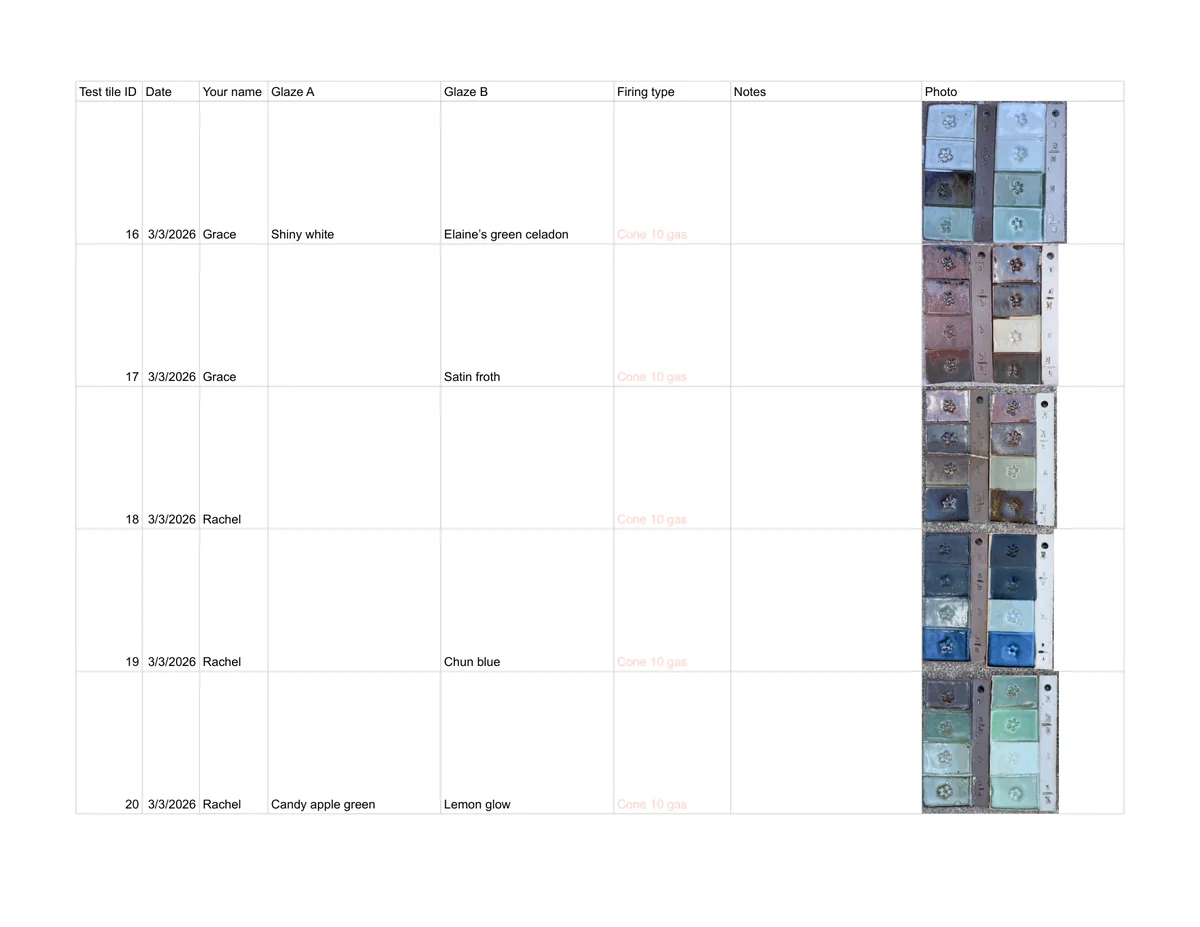
The core problem wasn’t motivation, it was consistency. If one member wrote “rutile blue” and another wrote “Rutile Blue #2,” the archive couldn’t be searched or sorted.
I gave the log a controlled vocabulary: glaze names became a dropdown, firing type became a fixed set, and a photo column made every result evidence rather than description. Members choose rather than type, so entries stay comparable without anyone policing them.
My ceramics teacher developed the physical testing methodology. My work was the information architecture around it — the structure that lets one person’s test become everyone’s reference.
What I learned
Put constraints where the work happens
Making glaze names a dropdown and firing type a fixed set moved consistency out of members’ memory and into the act of recording. Choosing from a list was easier than typing, so consistent data became the default.
Vocabularies are governance, not setup
Deciding what counts as a glaze name isn’t a one-time task. As the studio’s materials change, someone keeps making that call. Without it, the archive drifts back into inconsistency.